
The Thaw
On Spring, Ancestral Memories, and the Endless Pursuit of Meaning

Someone brought the good weather. That’s the only way to explain it. It arrived so suddenly, as if someone gathered it in their outstretched arms and dumped it over Virginia — muggy air and all — reminding us what summer will feel like.
I begin every email and every message with Happy Spring! and I just can’t stop.
I didn’t quite understand why until I paused to think about it. This winter has been brutal — long and cold, with snowstorms, ice storms, and record-breaking temperatures. I have never been so plainly depressed by a season: the low daylight, the cold, the endless stretch of it. For weeks I navigated my days between the bed and the chair by the fireplace, completely omitting the dressing room.
I know exactly why.
At a certain stage in life, people start behaving like their parents. It shows up in odd ways — from the sudden inability to pass a shiny object on the road without pocketing it (hi, grandpa and now dad), to handing out unprovoked profundities left and right (hi, not going to tell you who). Perhaps I rewound a bit too far. Somewhere in my mid-forties I seem to have skipped past my parents entirely and landed on my ancestors. Imagining their lives helps me make sense of my relationship with cold weather.
In the harsh winters of the Kazakh steppe, life must have slowed to a crawl. Humans, like other mammals, conserving energy, staying put, waiting it out. And if you spend half the year enduring cold weather, it makes sense that the real beginning of the year would arrive with spring.
My ancestors marked the New Year with the arrival of spring — not in the middle of winter, as we do now. In Kazakhstan the holiday is called Nauryz (or Novruz in other places), and in many traditions the celebrations can stretch for months.
That, too, now makes perfect sense to me.
Today the thermostat hit the 80s here in Virginia. I will be wishing everyone a Happy Spring! until Memorial Day. I simply cannot get enough of it. I am that happy to have survived the winter.
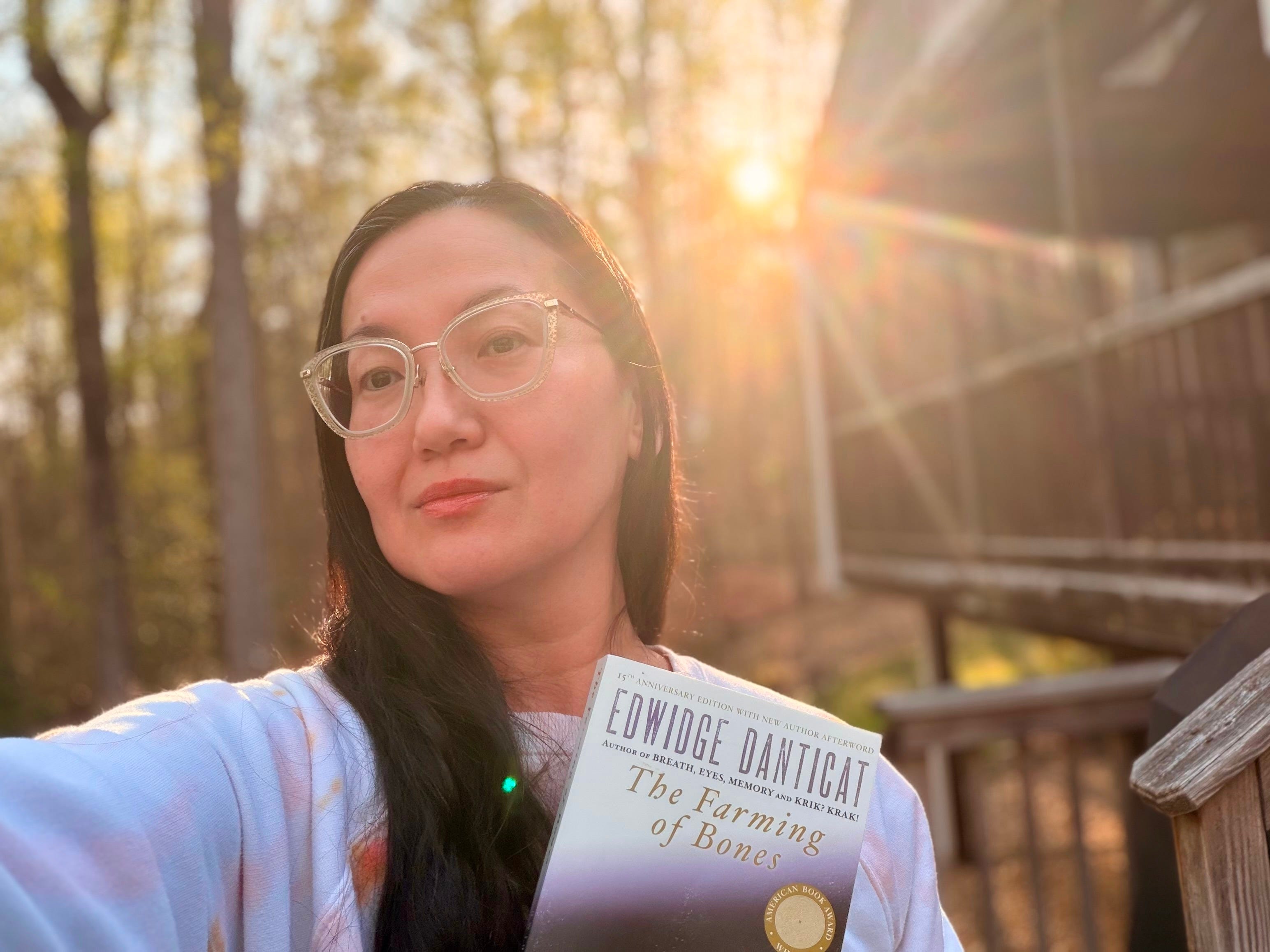
On the porch, in the sun, overlooking the woods, I take a lunch break from a work-from-home day. I smile into the brightness and let it warm me from the roots of my long black hair to the tips of my unkempt, wintered toes. In my hands I am holding a new book — The Farming of Bones by Edwidge Danticat.
This is how I arrived at it.
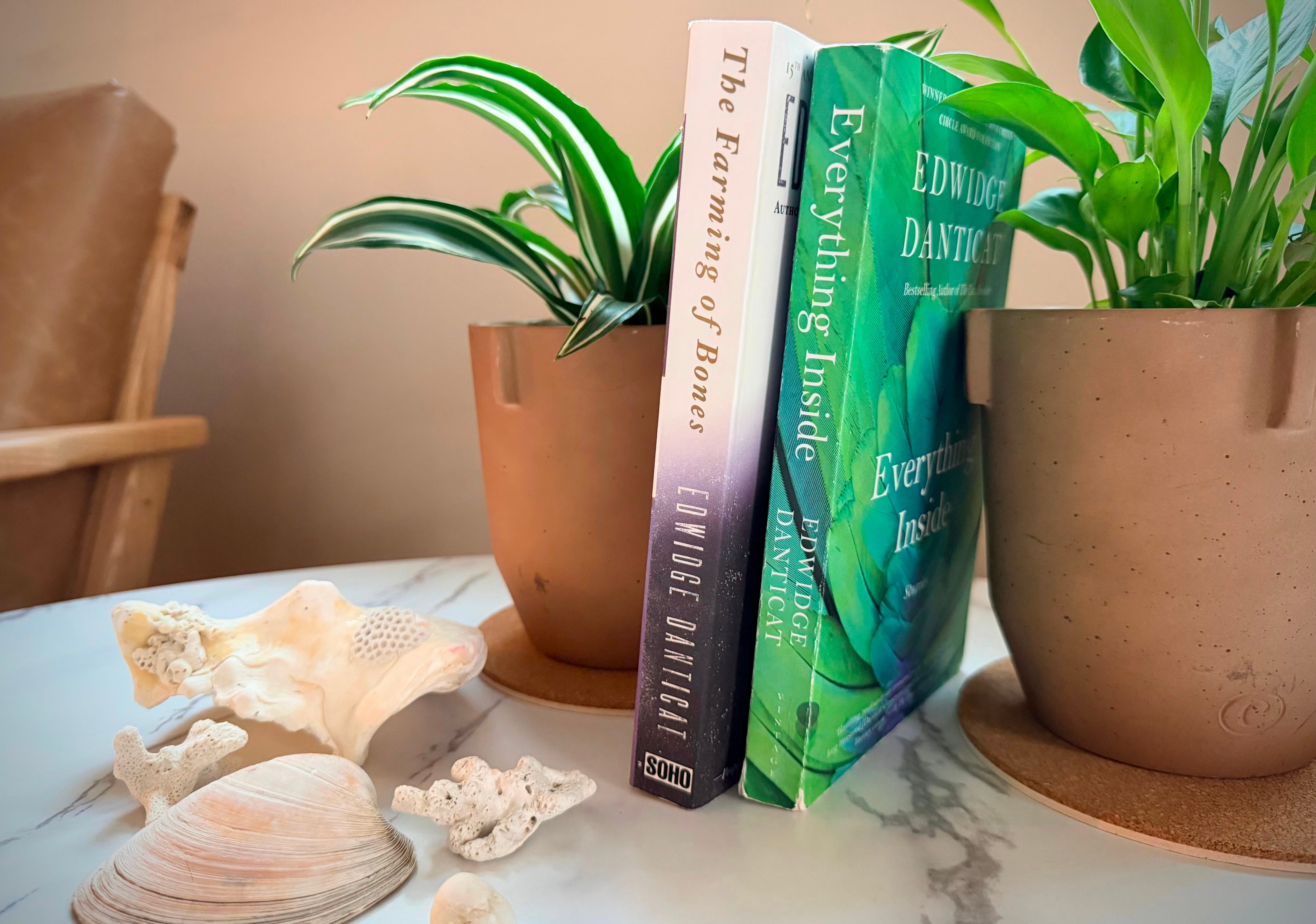
During a similarly cold winter last year, we impulsively jumped on a plane to the Dominican Republic. In a last-minute attempt to pick an appropriate read for the trip, I had Everything Inside, a short story collection by Edwidge Danticat, delivered just before we left for the airport. I opened the box and held the book in my hands for a moment — smelling the pages, brushing my fingers over its emerald-green cover, so evocative of the tropics and the simple joy of reading by the pool, under swaying palms, legs outstretched on a chaise lounge. Just a few hours away…
The drive from the airport to the resort began the way such drives often do: palm trees, wide roads, bright signs announcing new real estate developments, plastic surgeons, beach clubs. But gradually the landscape changed. Along the dusty roadside, people in resort uniforms were walking — in large groups, on foot, slowly, quietly. They moved through scrub and patches of jungle, along narrow paths and improvised roadside trails, all heading toward the resorts.
It looked grotesque against the destination. Almost post-apocalyptic.
In the shaky cab, my daughter sleeps in my arms, still drowsy from the flight. My son looks out the window in wonder. My husband tracks the route on Google Maps.
Within an hour we are checking in, saying cheers with welcome drinks, pulling on bathing suits, discussing dinner reservations. We grab our books and sun lotion — everything else is already waiting by the pool. The kids are ecstatic in the sudden warmth, tropical plants vining all around us.
Yet the road from the airport is hard to shake off.
“Buenos días, señorita!”
Our lunchtime host soon becomes the one we start seeking out at every meal.
“Do you see my name?” he asks, pointing to the tag on his uniform. “Gua-ri-o-nex! Can you say? Remember! Tomorrow you come back — I test you.”
We laugh.
Guarionex. Guarionex.
I repeat the name and brush the dusty corners of my memory. It sounds familiar, and then I remember — a television series about Christopher Columbus I watched with my parents when I was a child. Guarionex: the name of a Taíno chief who resisted the European arrivals on this island centuries ago.
I feel proud of retrieving the fact from somewhere deep in my mind and imagine announcing it triumphantly the next day.
Not only do I remember your name, I rehearse silently. I also know what it means. My people, too, name their boys after heroes from long ago.
But I never do. It is harder to be that cool in real life.
It wasn’t until we had settled into the rhythm of the resort that I finally opened my book. In the story collection, Edwidge Danticat, one of today’s most prominent voices in immigrant and diaspora literature, writes about Haitian lives shaped by migration, separation, and memory — on the other side of Hispaniola, the island shared by Haiti and the Dominican Republic.
Published in 2019, the collection is the last of many highly acclaimed works by the author, who has produced a prolific body of fiction and essays exploring Haitian history, the diaspora experience, and broader themes of injustice, poverty, and everyday human suffering. Until that brief winter getaway to the Dominican Republic, however, I had only encountered Danticat’s name indirectly and had never held one of her books in my hands.
One does not need to be a world history major to understand that a book about the Haitian diaspora carries no promise of a light poolside read. Yet my choice was neither erroneous nor accidental.
Since reading my first book by an author in exile, without fully understanding what it was that tugged at my heart, I found myself returning to similar voices. Writers such as Jorge Amado and Zoé Valdés kept drawing me back. Later, as I settled far from my own motherland, I discovered Aimée Nezhukumatathil, Ocean Vuong, and Jamil Jan Kochai, whose stories of immigration and the “thumbprints” it leaves across generations resonated deeply. Danticat’s narratives felt like a missing piece of my own reading journey. And even though Everything Inside was not the book that would explain the island to me at that time, it was the right place to start.
Now, with The Farming of Bones, the deeper and darker history of Hispaniola begins to unfold more starkly. The novel centers on the 1937 Parsley Massacre, when thousands of Haitians living in the Dominican Republic were killed on the orders of dictator Rafael Trujillo. Through the voice of a young Haitian woman named Amabelle, the story reconstructs a fragile border world where language, identity, and even the ability to pronounce a word could determine whether someone lived or died.
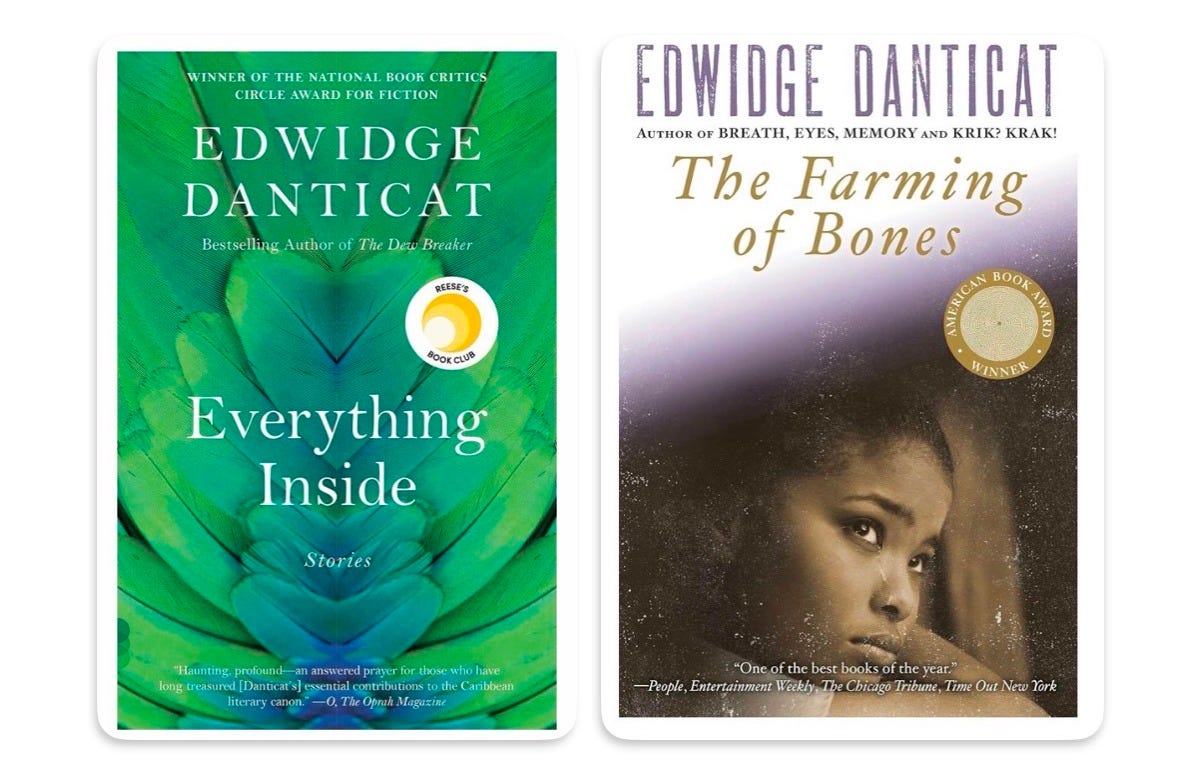
Back in Virginia, when I decided to capture how I experienced Danticat’s stories, I couldn’t shake the feeling of unfinishedness. I needed to learn more. How can two strikingly different nations share one island? How do Dominican tourism and Haitian history shape the dynamics between the two countries today? I had come to Hispaniola to do the resort and managed to leave the island largely untouched by any cultural or historical insight, aside from fleeting encounters with service staff carrying indigenous names…
I started searching. I learned about the Haitian Revolution, then about Haiti’s rule over the Dominican Republic, followed by Dominican independence, and finally the Trujillo regime. The Farming of Bones was a natural next read.
The sun is still high, and I have only made it through a couple of pages. It is hard to stay focused — distractions are plenty. There is a new bird in the woods, maybe a passerby on her way back north. Squirrels rustle the old foliage, looking for the acorns they buried before winter. Everything seems ready for life again.
Reluctantly, I close the book and get up. I press it against my chest in anticipation.
THIS is why I read! It is the personal connections to books that plant the words and ideas in our lives--and every combination of reader and book is unique. I love reading musings from fellow book lovers! Thanks for sharing your life-enrichment, Alua.